
Personal finance is something everyone has to deal with, yet very few people have gotten any formal education on. As your finances become more complex, you may start to feel uncertain about whether you’re making the right decisions. In these situations, many people turn to a financial advisor to help them create an organized plan, optimize their tax and investment strategies, and avoid costly mistakes.
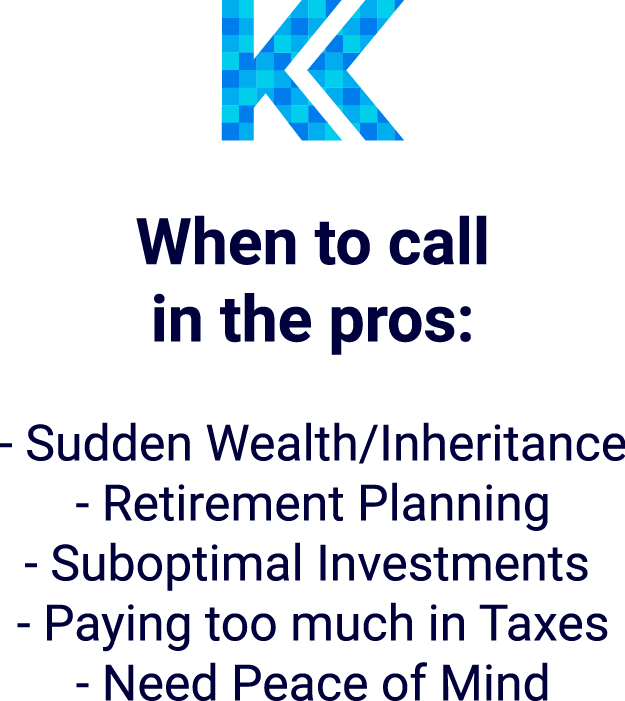
There are countless reasons someone might seek out an advisor, but based on my experience working with clients, these five situations tend to be the most common.
1. Managing a Sudden Wealth Event
Receiving a large sum of money, whether through inheritance, a business sale, stock options, or a legal settlement, can be life-changing yet overwhelming. While a nice lump sum can create financial security, it also comes with important decisions related to taxes and investments. Without professional guidance, it’s easy to make emotional decisions that will reduce the impact of this wealth over time.
Some people who inherit money or experience a sudden wealth event have never managed large sums before, and this sudden responsibility can lead to financial anxiety and feel like a burden. There are also tax implications that may not be immediately obvious. For example, inheriting an IRA requires careful planning to avoid mistakes with required minimum distributions (RMDs). Similarly, business owners who sell their companies may face significant capital gains taxes, and without proper planning, they could lose a large portion of the sale to the IRS.
An advisor helps structure a plan to preserve and grow your newfound wealth, ensuring that it aligns with the client’s long-term goals. This might include tax-efficient investment strategies, estate planning updates, or structuring distributions in a way that reduces taxes while maintaining needed income.
2. Navigating Retirement Planning
One of the most common reasons people seek advice is to ensure they’re on track for retirement. Many people think retirement planning is easy: just save as much as possible. Too bad there are a lot of moving pieces that can make it more complicated than expected. Rising healthcare costs, longer life expectancies, inflation, and constantly-changing tax laws all add layers of complexity to your retirement.
People often come to me with questions like:
-
When can I afford to retire?
-
Should I take Social Security early or delay it?
-
How do I generate income in retirement from my nest egg?
-
What’s the best way to withdraw money from my accounts without running out?
Financial advisors help clients build a structured plan that addresses all these concerns, ensuring that you can retire comfortably. This often includes determining the right asset allocation for your portfolio, optimizing tax-efficient withdrawal strategies, and balancing your guaranteed income sources like Social Security or pensions with investment income. Without a careful plan, it’s easy to over/under spend in the early years of retirement or withdraw funds in the wrong order, significantly decreasing the amount of money you’re able to spend and pass on in retirement.
3. Handling Investment Complexity
Investing isn’t as easy as picking a few stocks or funds and calling it a “diversified portfolio”. Asset allocation, risk management, tax efficiency, and behavioral bias all play a huge role in the long-term success of your investments. A lot of people start off managing their own investments, but as their wealth grows, they realize they need a more advanced strategy.
One of the biggest challenges investors face is managing their risk correctly. For example, someone who started investing in their 20s may have been comfortable with a very aggressive portfolio, but as they approach retirement, their risk tolerance and investment strategy should likely change. Other people might realize they’re holding too much in company stock or big stock positions, exposing them to unnecessary risk.
A good financial advisor helps align your investments with long-term goals, finding your custom balance between growth and risk. We also help manage tax efficiency through strategies like tax-loss harvesting and asset location optimization. The goal is to ensure that investment decisions are made strategically rather than emotionally.
4. Optimizing Tax Strategies
Taxes are one of the largest expenses people will face over their lifetime, yet a lot of my prospective clients overlook the value of proactive tax planning. Most people focus on filing their tax returns each year but don’t spend enough time planning ahead to reduce their overall lifetime tax bill.
Here are some key areas where tax planning can have a significant impact:
-
Roth conversions: Converting pre-tax retirement funds into Roth accounts in lower-income years can reduce lifetime taxes
-
Capital gains strategies: Selling investments strategically at long-term capital gains (LTCG) to minimize taxes can help maximize after-tax returns
-
Tax-loss harvesting: Offsetting gains with losses can help lower tax bills
-
Charitable giving strategies: Donating appreciated assets with a low-cost basis and high unrealized gain instead of cash can be more tax-efficient
-
Retirement withdrawal strategies: Planning which accounts to withdraw from first can significantly impact how long money lasts in retirement.
People typically come to a financial advisor when they realize they may be paying more in taxes than necessary, or when they need help navigating a tax strategy for their specific situation.
5. Gaining Peace of Mind and Avoiding Costly Mistakes
One of the most underrated reasons people seek out financial advice is simply for the peace of mind. Money is emotional, and it’s really easy to make financial decisions based on past experiences, fear, or outside influence. When markets are dicey, many investors panic and sell at the worst possible time, locking in their losses. Others hold onto investments they shouldn’t because they feel attached to them or don’t want to pay taxes on gains.
We provide an objective perspective by helping clients avoid common mistakes like:
-
Panic-selling during market downturns instead of sticking to your long-term investment strategy.
-
Overconcentrating in company stock, exposing yourself to unnecessary risk.
-
Failing to plan for major life events, leading to last-minute decisions that are not optimal.
-
Neglecting estate planning, which can cause unnecessary tax burdens or complications for your heirs.
Having a professional to guide financial decisions reduces stress and allows you to focus on things that make you happy. Rather than making reactive decisions based on short-term events, our clients can feel confident that they have a structured plan in place.
Final Thoughts
Everyone’s financial situation is unique, but these five situations are some of the most common reasons people decide to start working with a financial advisor. Whether it’s managing a sudden wealth event, planning for retirement, handling complex investments, optimizing taxes, or simply gaining peace of mind, professional financial advice can make a big difference for you.
We want to help you avoid costly mistakes while you enter new stages in life! If you’re not sure whether you’re making the most of your finances, consider scheduling a free assessment to discuss your specific goals and challenges.

– Clint Kraft
Founder and Financial Advisor, Kraft Capital