
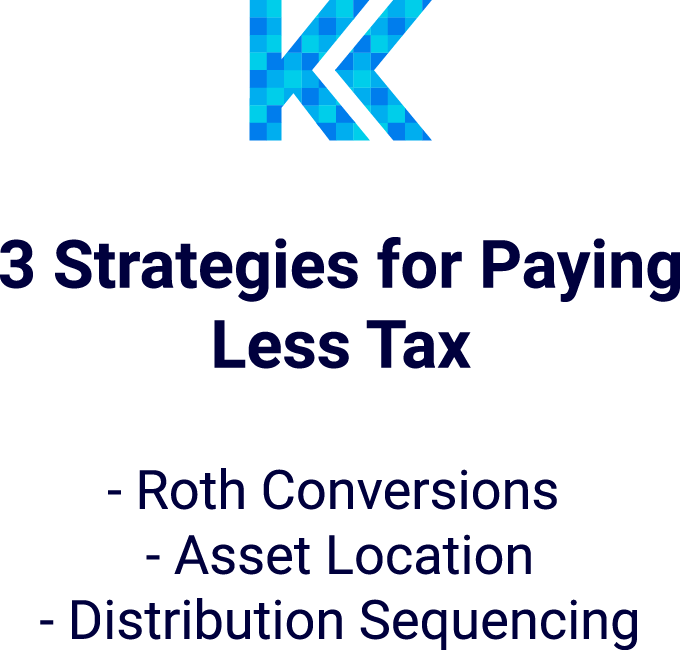
As an advisor, one of the most important conversations I have with clients is about tax efficiency in retirement. Many retirees are shocked by how much tax they still have to pay even after their main working years are over. However, careful tax planning is your friend during this time, making it possible to significantly reduce what you will give to the government over your life. In this article, I’ll go over 3 strategies that can potentially help you keep more of the nest egg you’ve worked so hard to build: Roth conversions, asset location, and distribution sequencing.
1. Roth Conversions
Roth conversions are a powerful strategy for retirees looking to optimize their tax situation on the investment side. This process involves converting funds from your traditional IRA or 401(k) to a Roth IRA. While you will owe taxes on the converted amount in the year of the conversion, the long-term advantages can outweigh the short-term tax costs. Once the funds are in a Roth IRA, they grow tax-free, and withdrawals made after 59.5 are also tax-free, provided you’ve met the required conditions, such as the 5-year rule.
One way to approach a Roth conversion strategy is by considering your current and projected income. If you expect to be in a lower tax bracket during your early retirement years or before RMDs kick in at age 73/75, it may be advantageous to do partial conversions each year. This approach allows you to spread the tax impact over multiple years, potentially keeping you in a lower tax bracket overall by only filling up to certain brackets with conversions. These conversions can help reduce your tax bill down the line, especially if you anticipate your tax rate increasing in the future.
We recommend consulting with an advisor before executing Roth conversions as there can be complex tax implications surrounding the strategy.
2. Implement Asset Location Strategies
Asset location is another crucial strategy that plays a huge role in minimizing taxes in retirement. The concept of asset location involves strategically placing your investments in the most appropriate accounts based on their tax treatment. Different types of investments generate different taxes, and utilizing an asset location strategy can improve your after-tax returns.
For example, holding tax-inefficient assets, such as bonds that produce regular interest income, inside tax-deferred accounts like traditional IRAs or 401(k)s is generally more beneficial than holding them in taxable brokerage accounts. This approach allows you to defer taxes on that interest until you withdraw funds, ideally when your income may be lower. On the flip side, keeping tax-efficient investments, like stocks, in taxable accounts can be smart, as long-term capital gains on these investments are likely to be taxed at lower rates.
Taking this even further, using tax-free accounts like Roth IRAs for high-growth investments can maximize your tax advantages. Since all qualified withdrawals from a Roth IRA are tax-free, holding assets in this account with a high growth potential can create significant tax savings over the long run. Failing to use an optimized asset location strategy can cost you a big chunk of your money over time.
3. Optimize Your Distribution Sequencing
When it comes to drawing down your portfolio in retirement, the order in which you withdraw from your investments can dramatically influence your tax bill. This strategy, known as distribution sequencing, affects how much tax you pay each year and can help you manage your taxable income more effectively.
Generally, it is smart to withdraw from taxable accounts first to allow tax-deferred accounts, such as traditional IRAs, to continue growing. This approach not only defers your tax liability but also allows for potential compounding growth in your tax-deferred accounts. Once you’ve drawn down taxable accounts, we typically want to use income from tax-deferred accounts before tapping into tax-free Roth accounts. This approach helps to control your income levels, potentially keeping your overall taxable income within lower tax brackets. An optimized distribution sequence will not look the exact same for everyone, many factors influence it.
Having an optimized strategy can prevent unintentional consequences, such as triggering higher Medicare IRMAA premiums or eliminating eligibility for ACA subsidies.
Final Thoughts
As you think about your retirement tax plan, know that having a proactive strategy in place is essential for preserving your wealth and minimizing how much you give to Uncle Sam over time. By taking advantage of smart Roth conversions, implementing asset location strategies, and optimizing your distribution sequencing, you can significantly lower your tax bill during retirement.
These strategies not only provide greater flexibility but can also improve the longevity of your retirement savings. If you’re uncertain about how to incorporate these strategies into your overall financial plan or want personalized guidance tailored to your situation, consider scheduling a free assessment. Together, we can create a strategy that allows you to focus on enjoying what should be a rewarding chapter of your life!
– Clint Kraft
Founder and Financial Advisor, Kraft Capital